
Green goals, unfair burden


The EUDR seeks global sustainability, but critics warn of ‘green colonialism’. Can unilateralism ever yield a fair global sustainability standard?
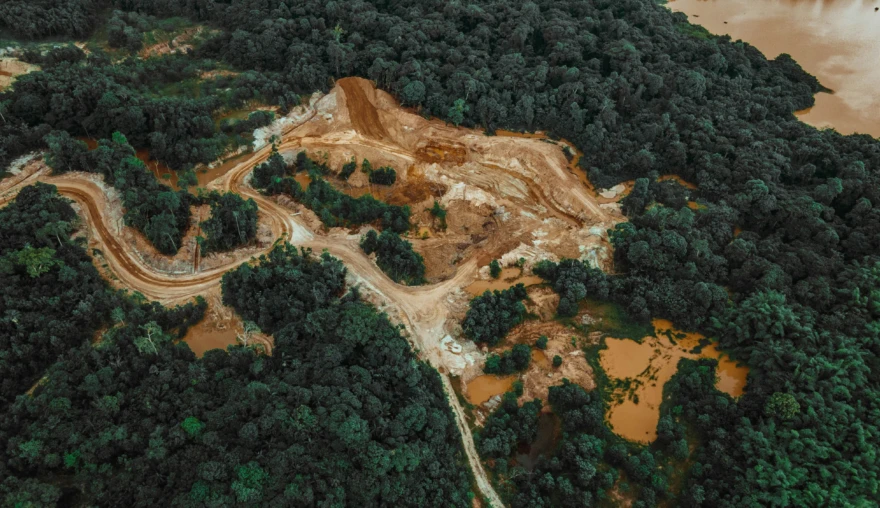
The EU Deforestation Regulation (EUDR) marks a major step forward in the EU’s commitment to global environmental responsibility. Adopted in 2023, the EUDR aims to sever the link between EU consumption and global deforestation, targeting commodities including palm oil and coffee, as well as derivative products such as leather and chocolate. As a central component of the EU Green Deal, it is anticipated that the EUDR will reduce greenhouse emissions and halt biodiversity loss. Its primary objective is to prevent EU-traded goods from driving deforestation. While the EUDR reflects the EU’s ambition to play a leading role in sustainability, its design and global effects have triggered intense debate.
Key innovations
The EUDR contains innovations that redefine the enforcement of environmental standards in supply chains. Notably, it replaces voluntary initiatives with mandatory due diligence obligations. Companies placing products on the EU market must prove that their supply chains are deforestation-free, regardless of local laws. This marks a major shift from earlier frameworks such as the EU Timber Regulation.
One distinct requirement is traceability. The EUDR requires the collection and submission of satellite imagery and geolocation data on the exact land plots where commodities are produced. This aims to prevent companies from hiding behind complex supply chains.
Another key EUDR innovation is its risk-based compliance approach. This allows the EU to tailor its rules based on environmental risks by commodity and region. States are classified as low, standard, or high risk, determining the level of due diligence required. Commodities from high-risk regions face stricter requirements, such as enhanced supply chain traceability and closer scrutiny of sustainability, which makes the Regulation more adaptable and targeted.
Unilateralism and extra-territorial extension in the EUDR
As a unilateral regulation, the EUDR, does not directly regulate other states extraterritorially. However, by introducing the ‘deforestation-free’ EU market access criteria, it widely affects transnational business, reinforcing the EU as a global regulator. Supporters of the EU-led unilateral mechanism frame it within the ‘Brussels effects’. According to them, the EUDR, a unilateral framework on environmental protection, will become a global standard via trading activities, levelling up forest conservation around the world.
Producer countries, however, see things differently. Many have labelled the extraterritorial effect of the EUDR as ‘regulatory imperialism’ and ‘conflicting with the principle of state sovereignty’. Through the unilateral approach to sustainability, non-EU states, though outside the EU law jurisdiction, are indirectly compelled to follow EU norms. Critics argue that the EU’s approach allows it to externalise environmental responsibility to the Global South, shifting the costs of sustainability onto producers who are least equipped to bear them.
In response to these pushbacks, proponents justify the EUDR by framing forest conservation as a ‘common concern of humankind’, arguing that the EU, as a major importer, has a duty to protect ecosystems on another continent through its supply chains. Yet, while global sustainability offers normative grounds, its legitimate ends do not automatically legitimise unilateral means, whose legality and legitimacy require more comprehensive evaluation.
Trade tensions created by the EUDR
One of the most prominent criticisms of the EUDR is its impact on international trade. Affected countries assert that the EUDR discriminates against producer states, restricts exports, and constitutes a de facto trade barrier. Indonesia and Brazil, for instance, have warned that the EUDR could disrupt supply chains and place disproportionate costs on small businesses. Similar concerns have been voiced by Argentina, Nigeria, and Malaysia, reflecting a wider anxiety among export-dependent economies.
Beyond these economic objections, legal questions have also been raised. For example, it is questioned whether the EUDR will fully align with international trade rules, particularly the non-discrimination principles and the general prohibition on trade restrictions. In response to these critics, it is expected that the EU will defend the EUDR by citing public policy exceptions in WTO law, which allow measures protecting health, morals, or natural resources if consistent with domestic rules.
A similar balance was tested in Malaysia’s 2019 complaint against the EU’s biofuel policies. Malaysia asserted that the EU’s environmental measures unfairly discriminated against its palm oil exports. In response, the EU defended its policy by claiming it pursued ‘a composite objective of mitigating climate change, preserving biodiversity, and addressing the associated moral concerns of the EU public’.
In this regard, in its ruling issued in 2024, the WTO panel partly upheld the EU’s position. However, it found that certain sustainability criteria do impose unfair discrimination against Malaysia. Both parties regard the ruling as a win, illustrating how delicate the balance remains between environmental protection and trade fairness.
Towards a fairer path for global sustainability
The EUDR demonstrates the EU’s efforts to fight deforestation via strict supply-chain regulation. Yet, its unilateral approach does not adequately consider local realities and it risks worsening inequality. To achieve its environmental goals while avoiding greater inequality, the EU must pursue more inclusive and transparent cooperation with producer countries.
This blog was written as part of an assignment for the Advanced LL.M. in Public International Law. The task was to highlight a regional instrument and critically analyse how it contributes to addressing sustainability challenges.






0 Comments
Add a comment