

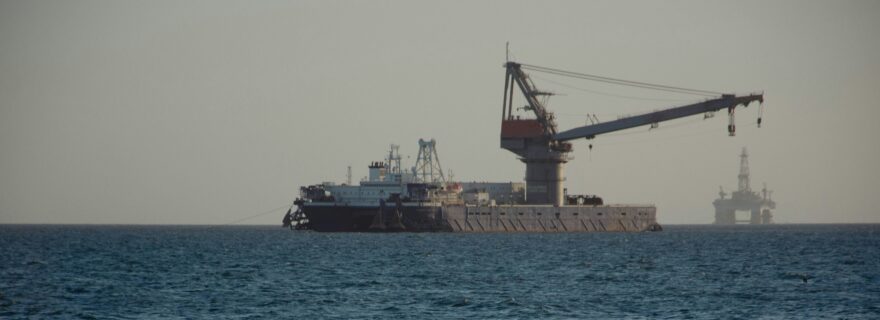
How one Dutch company holds the key to deep sea mining
Deep sea mining has become a much debated environmental and legal issue these last years. What if a relatively unknown Dutch company could influence the future of one of the world’s most controversial industries?
Supporters argue it could benefit the economy by providing critical minerals for the green energy transition. Opponents warn that it could cause irreversible damage to ecosystems. While this debate mostly focuses on the United States and international organizations, the Netherlands is playing a surprisingly important role in this unfolding story.
The ocean floor as the ‘common heritage of mankind’
Since the adoption of the United Nations Convention on the Law of the Sea (UNCLOS) in 1982, the ocean floor has been recognized as the common heritage of mankind. This means that no state can claim ownership over this area. Instead, decisions regarding the ocean must be made collectively through the International Seabed Authority (ISA). By setting these boundaries, a race to exploit seabed resources for personal benefit is avoided. This framework appeared to offer a resilient solution, however, growing economic interests have begun to test its limits.
Growing demand for batteries, electric vehicles, and renewable energy technologies require metals such as nickel, manganese, and copper. The polymetallic nodules which can be found on the ocean floor contain many of these minerals, which explains the sudden interest. However, scientists warn that mining activities could damage the fragile ecosystem and therefore stress the importance of a full scientific foundation to determine whether mining is sensible and if so, what the best approach would be.
To address these concerns, ISA has been working on a Mining Code: a set of rules concerning deep-sea mining. Due to different stances the negotiations are still ongoing, with no binding exploitation regulations in place. Some member states advocate for a precautionary pause or moratorium until more scientific knowledge becomes available, like Germany and France. Others are eager to push on, such as China and Japan. In 2023, the Dutch House of Representatives (Tweede Kamer) adopted a motion calling for a precautionary approach.
The United States is turning the tide
While ISA continues to find consensus, developments in the US have complicated matters significantly. The US has been working closely with ISA but never ratified UNCLOS. Now, the Trump administration, promotes the idea of unilateral deep-sea mining, meaning independently exploiting the international seafloor without ISA-approval. This idea became reality when an executive order authorized American authorities to issue mining permits independently. From a legal perspective, this directly undermines the international system established under UNCLOS, pressuring ISA to finalise the Mining Code. However, it is also creating a pathway for commercial mining activities to begin before international consensus has been reached.
One company that is most eager to move forward is The Metals Company (TMC), a Canadian deep-sea mining company. TMC has already invested millions and recently applied for permits through American channels. However, TMC can’t work completely independently. The most significant obstacle they face is the highly specialised technology that deep-sea mining requires and only one company offers this solution.
Allseas appears on the stage
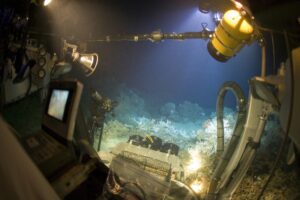
Few people outside the industry have heard of Allseas, who specialise in offshore engineering and are owned by a Dutch family. Besides pipelaying and overseeing platforms, they have conducted trials to research deep-sea mining, specifically in the Clarion-Clipperton Zone in the Pacific Ocean. Its vessel, the Hidden Gem, is currently the only ship in the world able to collect polymetallic nodules from the ocean floor. Moreover, Allseas possesses all patents, expertise, and relevant technologies required to make deep-sea mining a reality.
This advantage has made Allseas a strategic partner for TMC. Allseas reportedly holds a significant stake in TMC and both parties recently signed a commercial agreement covering the design, commissioning and operation of a commercial-scale collection of nodules. The exploitation is estimated to start in 2027 and seeing the current course of action, the companies seem dedicated to making this happen. Even though the focus is primarily on TMC, without Allseas, TMC and the US would be nowhere close to their deep-sea mining ambitions.
The political dilemma
The Netherlands has ratified UNCLOS and has consistently positioned itself as champion of multilateral governance of the international seabed. Within the 2023 motion, the Dutch government explicitly rejects unilateral deep-sea mining. That political position, however, sits opposite of Allseas’ activities.
Although international law primarily regulates states, they are still expected to ensure that activities under their jurisdiction don’t undermine their international obligations. Measures could be taken to prevent Allseas from unilateral deep-sea mining. Allseas also recognizes this possibility, whose CEO suggested to potentially continue under a different flag, which is possible since Allseas is also based in Switzerland. However, with Switzerland having signed a deep-sea mining moratorium, it might not make things easier.
For now, the Dutch government appears to be monitoring developments rather than acting, despite rejecting unilateral deep-sea mining. Yet, the realization of unilateral deep-sea mining is close, together with all the possible negative consequences. For that reason, the role of Allseas deserves far greater public and political attention. If commercial interests move faster than international law, protection of the environment and the international realm will become increasingly difficult. So, if the Netherlands truly wants to defend her principles, they can no longer remain bystanders. The future of the ocean doesn’t depend on what lies below the surface, but on the choices, we make above it.
0 Comments
Add a comment