
Loss & Damage Fund: Justice or charity?

The Fund for Responding to Loss and Damage was hailed as a historic breakthrough, but if contributions remain voluntary, it risks remaining symbolic rather than delivering real climate justice.
The Fund for Responding to Loss and Damage (FRLD), established in 2022, was hailed as a historic breakthrough for addressing the urgent and growing needs of vulnerable communities in developing countries facing irreversible impacts of climate change. It has been operationalised and reimbursements will begin soon, which means that vulnerable communities and developing countries suffering from climate harms can apply for funding.
Contributions to the Fund, however, fall short of the estimated needs since there is no obligation for states to contribute. As climate losses rise, the following questions arise: what does the Fund stand for? Can a mechanism built on voluntary generosity deliver climate justice, or will it remain symbolic, durable in appearance but insufficient in practice?
I believe the voluntary design exposes a deeper injustice. Climate harms are not random disasters, but the foreseeable result of historically unequal patterns of production and consumption. Historically, large emitters have failed to contribute in proportion to their emissions, while those that do contribute insist that the payments remain voluntary and legally non-binding, as I will discuss below.
A Fund built on careful language
Certain states have always been careful to avoid any language suggesting responsibility or liability. A prime example: when ‘loss and damage’ entered the Paris Agreement, a legally binding international treaty on climate change, the United States would only accept that if it did not provide a basis for liability or compensation. The FRLD has inherited this deliberate ambiguity. Contributions are described as voluntary and contributing countries make sure that they do not accidentally accept any blame. The political price of establishing the Fund was ensuring that it could not be interpreted as a foundation for future claims of state responsibility.
Voluntary funding and the problem of moral distance
Climate change can be seen as a form of structural injustice: the most severe harms are produced by a global economic system entrenched in historical patterns of production and consumption, while those least responsible bear the most serious consequences. Because contributions are voluntary, the Fund reflects stark disparities between historical responsibility and financial commitment. The pledges published by the UNFCCC show that several of the world’s largest historical emitters such as the United States and China have pledged comparatively little or nothing.
This inequality reflects the deeper tension between charity and justice. Voluntary contributions are often framed as acts of generosity, but that framing hides the historical antecedents of climate harm. Many of the suffering states did not contribute significantly to global emissions. Instead, wealthier states industrialised at a faster pace, generated higher emissions, and often extracted resources globally.
Unless contributions are understood as morally, or legally, owed compensation, the structural injustice underlying climate change will persist. Voluntariness creates moral distance: contributors become benefactors, rather than following a duty.
Legal obstacles reinforce political caution
Part of this reluctance reflects legal uncertainty and a fear of triggering a ‘liability chain’. Establishing causation between the emissions of a particular actor and specific climate harms remains challenging due to the multiplicity of causes of climate change and the cumulative nature of greenhouse gases. Even the recent Advisory Opinion on the Obligations of States in Respect of Climate Change of the International Court of Justice recognises this. However, the Court also stated that it is ‘possible to determine each State’s total contribution to global emissions, taking into account both historical and current emissions’. In its Advisory Opinion, the Court acknowledges that states can be held accountable. This explains why states fear that acknowledging responsibility in the context of the Fund could be interpreted – politically and legally – as opening the door to claims under the principles of state responsibility.
Why the framing matters
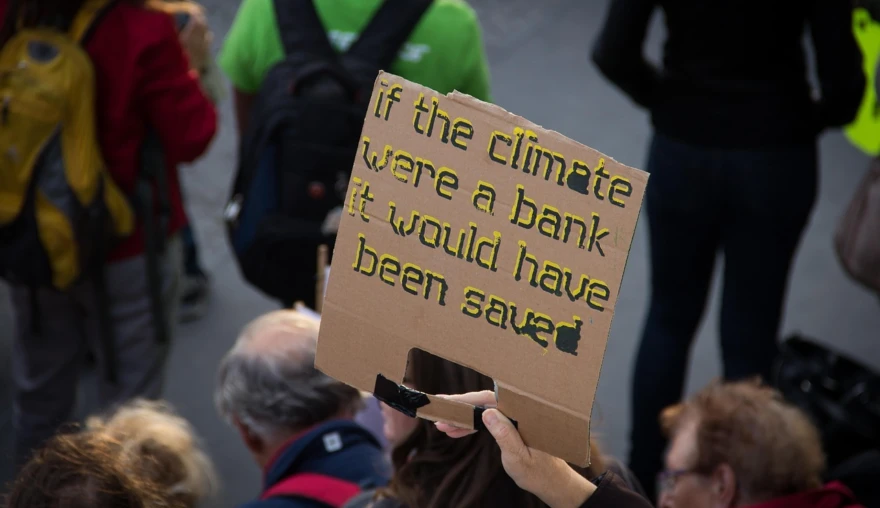
The Fund’s existence is more important than the rationale behind contributions, but motivation shapes durability. Voluntary contributions are unpredictable, fluctuating with domestic politics, economic pressures and geopolitical tensions. A responsibility-based model creates stronger expectations of stable and adequate support if contributions become mandatory. More importantly, framing contributions as remedial obligations would acknowledge the relational inequalities at the heart of the climate crisis. The harms suffered by vulnerable states are not random misfortunes – they are the result of a historically unequal global economic system.
Fund at a crossroads
It is a historic achievement that the FRLD can receive and disburse funds. Its future, however, depends on whether states will continue to contribute.
While the Fund’s institutional architecture is taking shape, the underlying questions of responsibility and justice remain unresolved. If the international community is serious about climate justice, the Fund must evolve beyond a mechanism built on voluntary generosity. To avoid becoming merely symbolic in the long term, the Fund should move towards a framework that recognises what climate justice ultimately demands: those who contributed most to the crisis cannot remain free to decide whether they will help repair its consequences.
This blog was written as part of the Sustainability & Law lecture series 2025.




0 Comments
Add a comment