
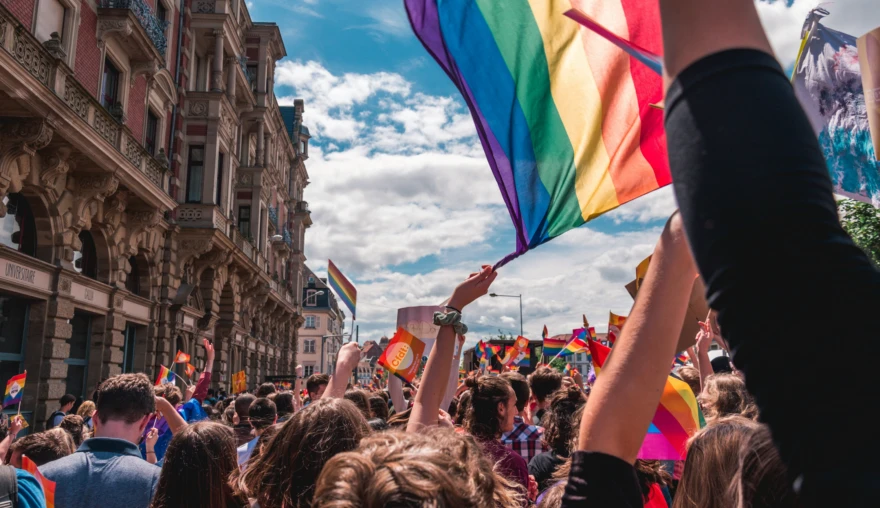
Child protection is no excuse in visibility of LGBTQI+ people

Acceptance of LGBTQI+ people has dropped among Dutch pupils. The CJEU recently ruled that ‘child protection’ cannot justify making LGBTQI people invisible. Can the law help schools become more accepting?
On 21 September 2026, the Trimbos institute published their HBSC study on the well-being of school children in the Netherlands. One finding stands out: acceptance of LGBTQI+ persons among Dutch children has significantly dropped. Only 22% of boys and 51% of girls have positive attitudes towards LGBTQI+ people, down from 40% and 78% in 2021. The group of children who feel their LGBTQI+ peers are free to express themselves at school has dropped from 60% to 45%.
This fits in a wider pattern of growing negative attitudes towards LGBTQI+ people in the European Union and beyond. Yet the Court of Justice of the European Union (CJEU) is moving in the opposite direction. In April 2026, in the case of Commission v. Hungary, it ruled that ‘child protection’ cannot be used to push LGBTQI+ people out of public life. That ruling resonates with what Dutch children are experiencing.
Commission v. Hungary: child protection as justification
Hungary’s 2021 law restricted content portraying LGBTQI+ identities that could reach minors, presenting this to protect children and combat paedophilia. The European Commission argued that the Hungarian law violated fundamental rights and stigmatised LGBTQI+ persons. The Court agreed and found, for the first time, a freestanding violation of Article 2 TEU, the provision that sets out the Union’s founding values, including human dignity, equality and respect for human rights.
The Court’s decision does not address LGBTQI+ children directly, and it is binding on Hungary, not the Netherlands. Though its relevance is indirect, its effects are still real. The Court considers access to information, representation, and visibility to be matters of fundamental rights, not political privileges a government can withdraw in the name of child protection. States may still regulate content that is genuinely harmful or age-inappropriate. They cannot restrict material simply because it portrays LGBTQI+ people. Now that the values contained in Article 2 TEU are enforceable legal limits, that line of argument carries real weight.
Why visibility matters
For LGBTQI+ children, visibility is about more than positive representation. It determines whether they have the language to understand themselves, whether they know that others share their experience, and whether they feel able to participate openly in school life. Taking such information away does not protect them. It may even deepen their sense of isolation.
Children’s rights law points the same way. The UN Convention on the Rights of the Child (UNCRC) protects every child against discrimination (Article 2), recognises children’s right to be heard in matters affecting them (Article 12), and the freedom to seek, receive, and impart information (Article 13). Article 8 protects the child’s right to preserve their identity, including sexual orientation and gender identity. States are obliged to make these rights effective.
For LGBTQI+ children, these provisions support access to age-appropriate information about identity, relationships, and diversity, and the ability to express themselves without being silenced or stigmatised. These principles are also reflected in the EU Charter of Fundamental Rights, and the Court's reasoning in Commission v. Hungary shows that ‘the best interests of the child’ cannot be a licence to remove LGBTQI+ identities from children's educational or media environments. Best interests must be read together with dignity, autonomy, development and equality.
From legal protection to lived reality
The Trimbos findings give the ruling a practical context. When less than half of Dutch secondary school pupils believe that gay or lesbian classmates could speak openly about their sexual orientation at school, the problem is not only declining acceptance but also a shrinking sense of safety for children who want to express themselves. The ruling establishes a legal foundation, but that does not make a school safe. That will take inclusive, age-appropriate education, effective action against anti-LGBTQI+ bullying, staff training, and schools where children can express their identities safely.
The central lesson here is that child protection and LGBTQI+ equality are not opposing goals. Protecting children means protecting them from discrimination, giving them access to information, listening to their views, and supporting their development. In Commission v. Hungary, the CJEU has given these principles stronger legal force. The task now is to make them felt in the classroom.


0 Comments
Add a comment